Thailand is hot in a specific way, and it catches men out. It isn't the dry heat of a Mediterranean summer — it's humid heat, often 32–38°C with 70–90% humidity, where sweat can't evaporate and the wrong shirt is soaked through by mid-morning. Then you step into a mall or a taxi and the air-conditioning is set to arctic. Dressing for Thailand means dressing for both extremes in the same outfit, all day, for weeks.
The good news: once you know the rules, packing is easy and you can look genuinely put-together the whole trip. This guide covers the fabrics that survive the humidity, what to wear in the city versus the islands, the temple dress code that trips up a lot of visitors, and a one-bag capsule for one to two weeks.
What should a man wear in Thailand?
The short answer: light, breathable natural fabrics in pale colours, cut relaxed. Linen and Tencel shirts, knitted polos, airy linen trousers and tailored shorts, and breathable shoes. Keep one long-trouser-and-sleeved-shirt combination for temples, and carry one unlined linen layer for the fierce indoor air-con.
The single most important decision is fabric, because in humidity fabric is the difference between comfortable and miserable. Linen is the benchmark — it hangs off the skin and dries fast. Tencel/lyocell, tropical-weight merino and seersucker are close behind. The two to leave at home are plain heavy cotton (it soaks up sweat and stays wet) and polyester or synthetic "travel" shirts (they trap heat and start to smell by evening). If you only remember one thing, remember that — the full ranking is in our guide to the best fabrics for hot, humid weather.
The second decision is colour. Light colours reflect heat, and near-white hides sweat best, so a pale palette — chalk, ecru, sand, stone, soft sky and sage — keeps you cool and looking fresh. Skip mid-grey and mid-blue shirts (they spotlight sweat marks) and all-black (it absorbs the sun and reads heavy).
City, temples, islands, evenings: what changes
Thailand isn't one dress code. Here's how each part of a typical trip shifts what you wear.
Bangkok and the cities (day)
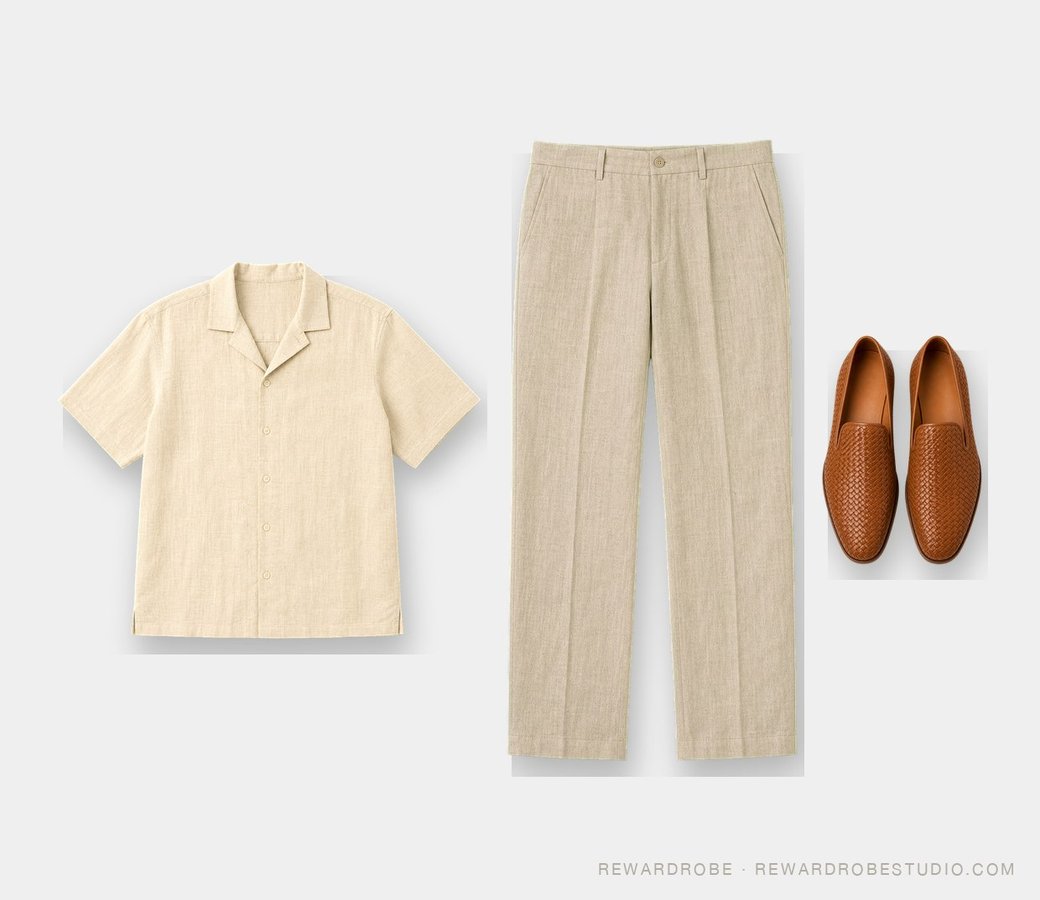
Daytime in the city is relaxed. A linen camp-collar shirt or a knitted polo with tailored shorts or light trousers and loafers or clean sneakers is right for markets, cafés and getting around. The one thing to plan for is the air-con — malls, the BTS Skytrain, taxis and offices are cold — so a lightweight linen overshirt or unlined blazer you can throw on is genuinely useful, not just style.
Temples (Wat Pho, the Grand Palace, and beyond)
This is where visitors most often get turned away. Thai temples require covered shoulders and knees — for men, that means long trousers, not shorts, and a shirt with sleeves (a T-shirt is fine; a tank top is not). Linen trousers and a linen shirt are perfect: respectful and still cool. You remove your shoes before entering, so slip-on loafers or sandals save you fumbling with laces. Pack one temple-appropriate outfit and you can visit any of them on a whim.
The islands and beaches (Phuket, Krabi, Koh Samui)
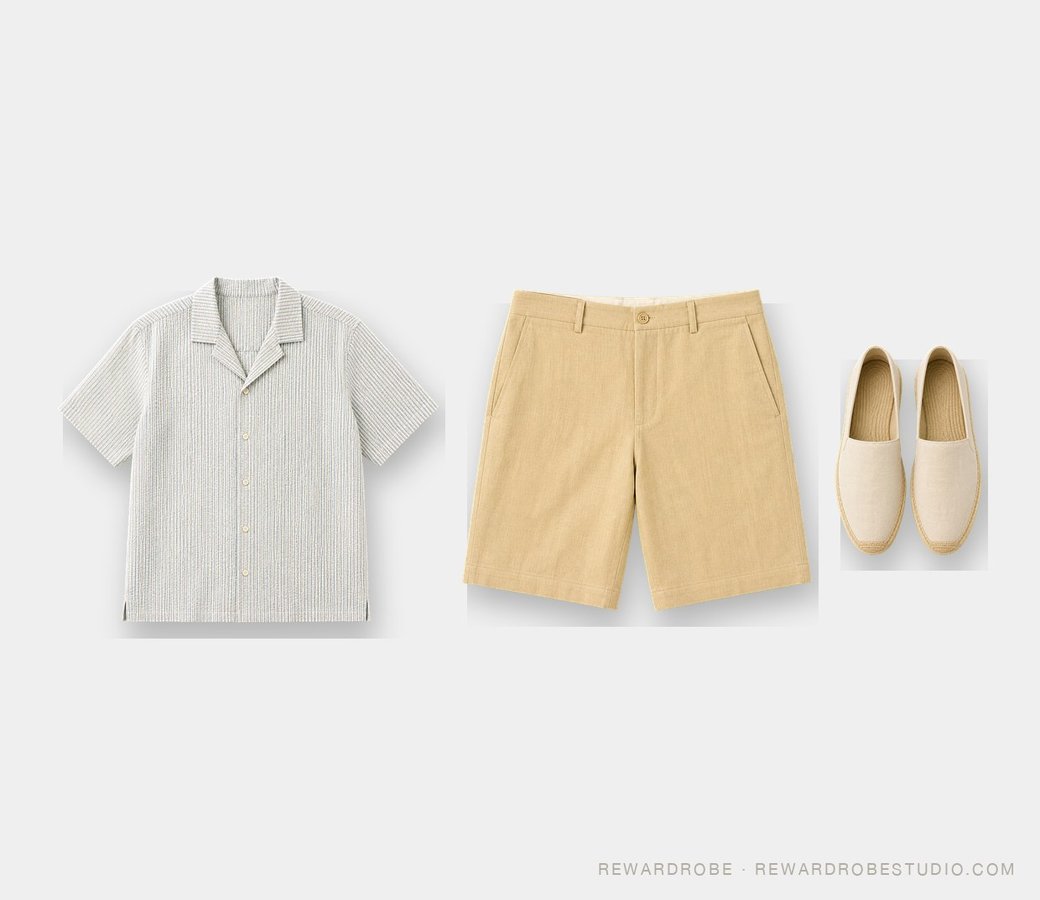
Resort mode. Swim shorts, a seersucker or linen camp shirt worn open over a tee, and espadrilles or leather sandals. Tailored shorts at the knee — never cargo — with a polo covers dinner at a beach restaurant. Keep it pale and simple; the loud-print holiday shirt is the one thing that will date every photo.
Rooftop bars and dinner
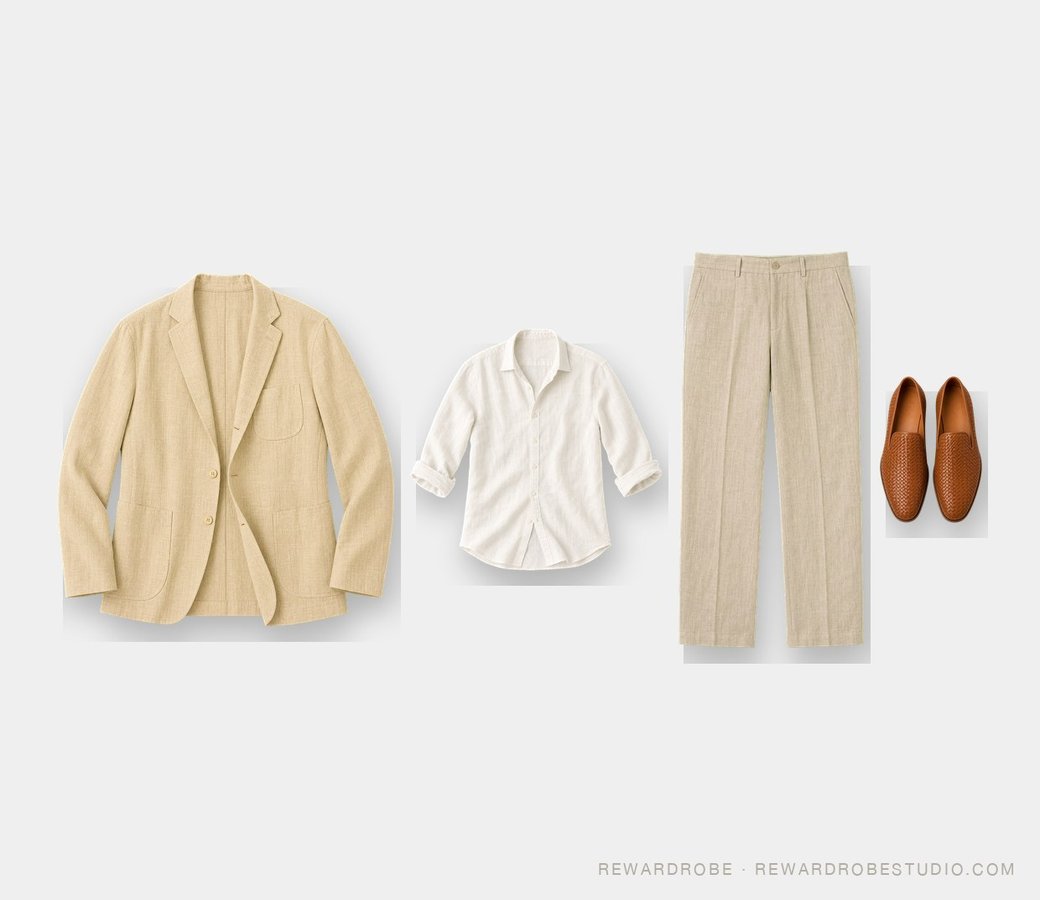
Bangkok's rooftop bars and better restaurants run a smart-casual dress code, and many don't allow shorts or sandals in the evening. This is where the unlined linen blazer earns its place: over a polo or a linen shirt, with light trousers and loafers, you're correct anywhere — and the same jacket handled the air-con all day. One blazer, packed flat, unlocks every evening.
The Thailand packing list for men (1–2 weeks)
You do not need a big suitcase. Around twenty breathable pieces recombine into a fortnight of outfits — pack light, wash a few things mid-trip, and you'll never repeat a look.
Pack this
- 3–4 shirts — linen or Tencel camp-collar and long-sleeve, pale colours (one white linen for temples and evenings)
- 2 knitted polos — fine linen-knit or tropical-weight merino (breathable, resist odor)
- 1 quality tee — Tencel or merino, not heavy cotton
- 2 pairs tailored shorts — cotton-linen, at the knee, quiet colours
- 2 pairs light trousers — linen for temples and city; one can be a crisper tropical-wool for evenings
- 1 unlined linen blazer or overshirt — the air-con layer and the dinner jacket
- Swim shorts — one pair that also passes as normal shorts
- 2–3 breathable shoes — woven loafers, minimal sneakers, and espadrilles or a leather sandal (rotate them; leather needs a day to dry)
- No-show liner socks — keep loafers fresh worn sockless
- A packable hat and sunglasses — a straw hat in moderation; understated shades
Leave this at home
- Loud Hawaiian and graphic tropical print shirts
- Cargo shorts and anything mid-thigh
- Heavy cotton tees, dark jeans, and synthetic "performance" shirts
- Tech/hiking sandals — and never sandals with socks
- All-black outfits (heat-absorbing, and they wilt in the humidity)
The Tropical Edit — 45 hot-weather looks from 21 pieces
This packing list is the short version of The Tropical Edit: 21 breathable pieces that build 45 photographed looks for extreme heat and humidity, with a fabric-and-sweat guide and a shopping checklist. Written from Bangkok — the definitive answer to what to wear in the tropics.
What to wear in Thailand: quick answers
What should I pack for Thailand for two weeks?
About twenty breathable pieces that recombine: 3–4 linen or Tencel shirts, 2 knit polos, a good tee, 2 pairs of tailored shorts, 2 pairs of light trousers, an unlined linen blazer for evenings and air-con, swim shorts, and 2–3 breathable shoes to rotate. Pale colours, natural fabrics, no heavy cotton or synthetics.
What do men wear to temples in Thailand?
Long trousers (not shorts) and a shirt with sleeves — covered shoulders and knees are required. Linen trousers and a linen shirt are cool and respectful, and slip-on shoes make the shoes-off rule easy. Avoid tank tops and ripped clothing.
What fabrics are best for Thailand's heat and humidity?
Linen first, then Tencel/lyocell, tropical-weight merino and seersucker. Avoid plain heavy cotton (it saturates and clings) and polyester (it traps heat and odor). For tailoring, high-twist tropical wool stays crisp where ordinary wool wilts.