A useful starting outfit: an Oxford shirt or light knit, chinos or dark jeans, closed shoes and a light jacket you can remove. Three layers can suit a cold start; they are not compulsory for every 60-degree day.
The same temperature can feel quite different on a sunny walk and a windy station platform. Check the hourly forecast, the chance of rain and how long you will be outside. Dress for the part of the day you will actually experience, with one easy adjustment if conditions change.
What to wear at 60°F: choose for the conditions
| Your day | Start here | Adjust it |
|---|---|---|
| Sunny, mostly walking | Oxford shirt or light knit, chinos, sneakers. | Carry a light jacket if you will be out after sunset. Remove it before you overheat. |
| Windy or mostly in shade | A tee or shirt under a light wind-resistant jacket, with jeans or chinos. | Add a thin knit if you still feel cold. A jacket's wind resistance depends on its cloth and construction. |
| Showers or steady rain | A breathable top, rain outerwear, trousers and rubber-soled footwear. | Match the coat's protection to the rain. Water-repellent and waterproof are different claims; check the garment details. |
| Early commute, then a warm office | Shirt or polo, office-appropriate trousers and shoes, plus a removable layer. | Keep a light knit available if the room is cool. Avoid building in warmth you cannot take off. |
These are comfort starting points for ordinary day-to-day dressing. If you run warm, begin lighter; if you feel the cold, add the knit. The temperature alone cannot tell you precisely how many layers you will need.
The base, the optional knit and the jacket
1. Choose a base that works on its own
An Oxford shirt, plain tee or knitted polo gives you an outfit you can still wear when the jacket comes off. Match the formality to the day: a tee for relaxed plans, an Oxford for a casual office, or a fine knitted polo when you want something between them.
2. Add a mid-layer when you need warmth
A fine-gauge crewneck or quarter-zip fits under many light jackets without much bulk. An overshirt can be your outer layer in mild, dry weather, rather than another garment you must fit underneath a jacket. The practical advantage of separate layers is that you can remove one; garment weight alone does not establish which outfit is warmer.
3. Let the forecast choose the outer layer
A Harrington or field jacket can suit a dry, breezy day, depending on the fabric. A suede jacket is a dry-weather choice. For rain, look at the garment's actual water-protection claims and construction instead of assuming every mac or waxed jacket offers the same protection. For prolonged rain, pair suitable waterproof outerwear with weather-appropriate shoes.
Six complete 60-degree outfit formulas
Each original flat-lay styling visual below has a complete recipe. Use comparable pieces you own; add or remove the optional layer to match your comfort.
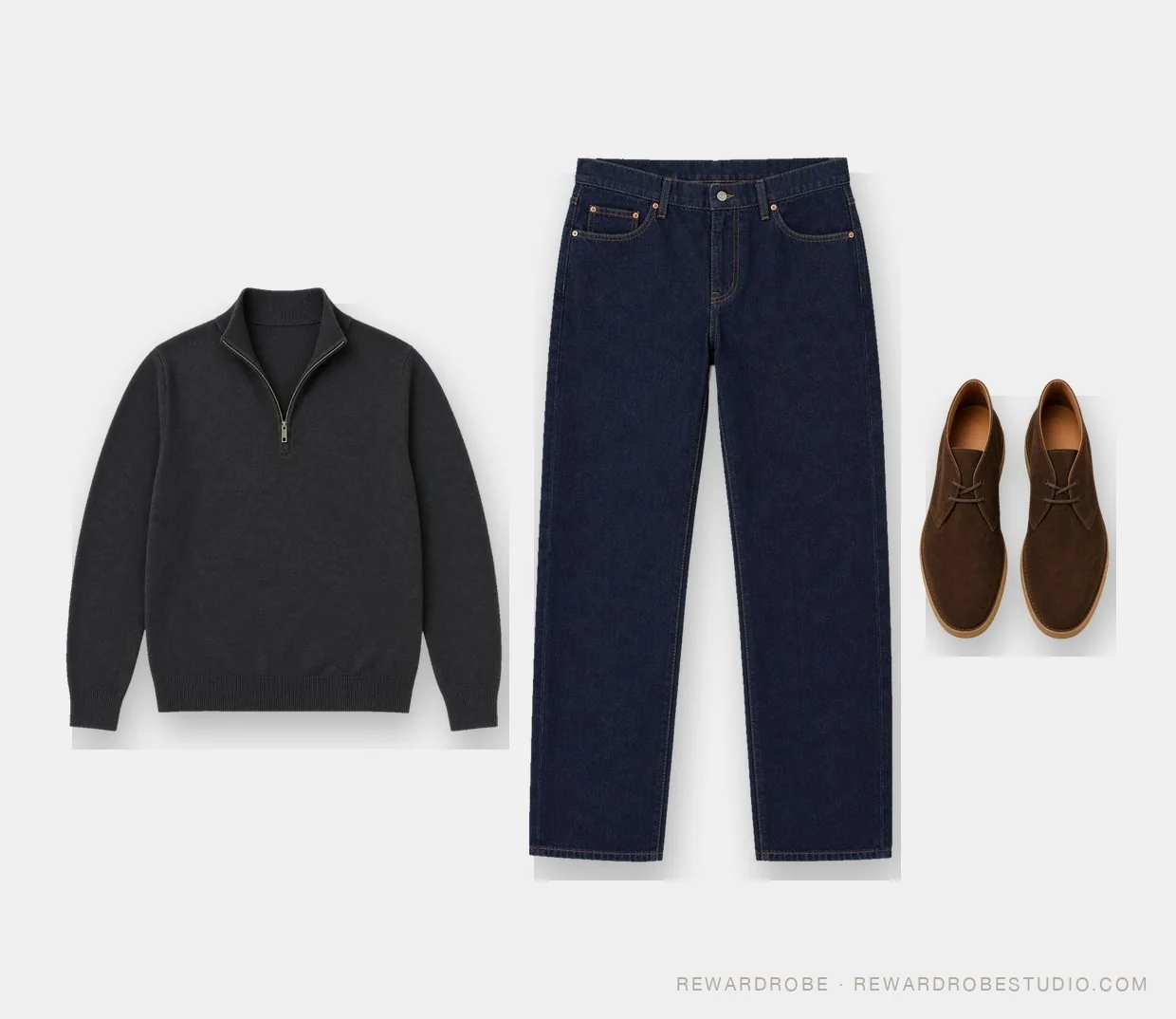
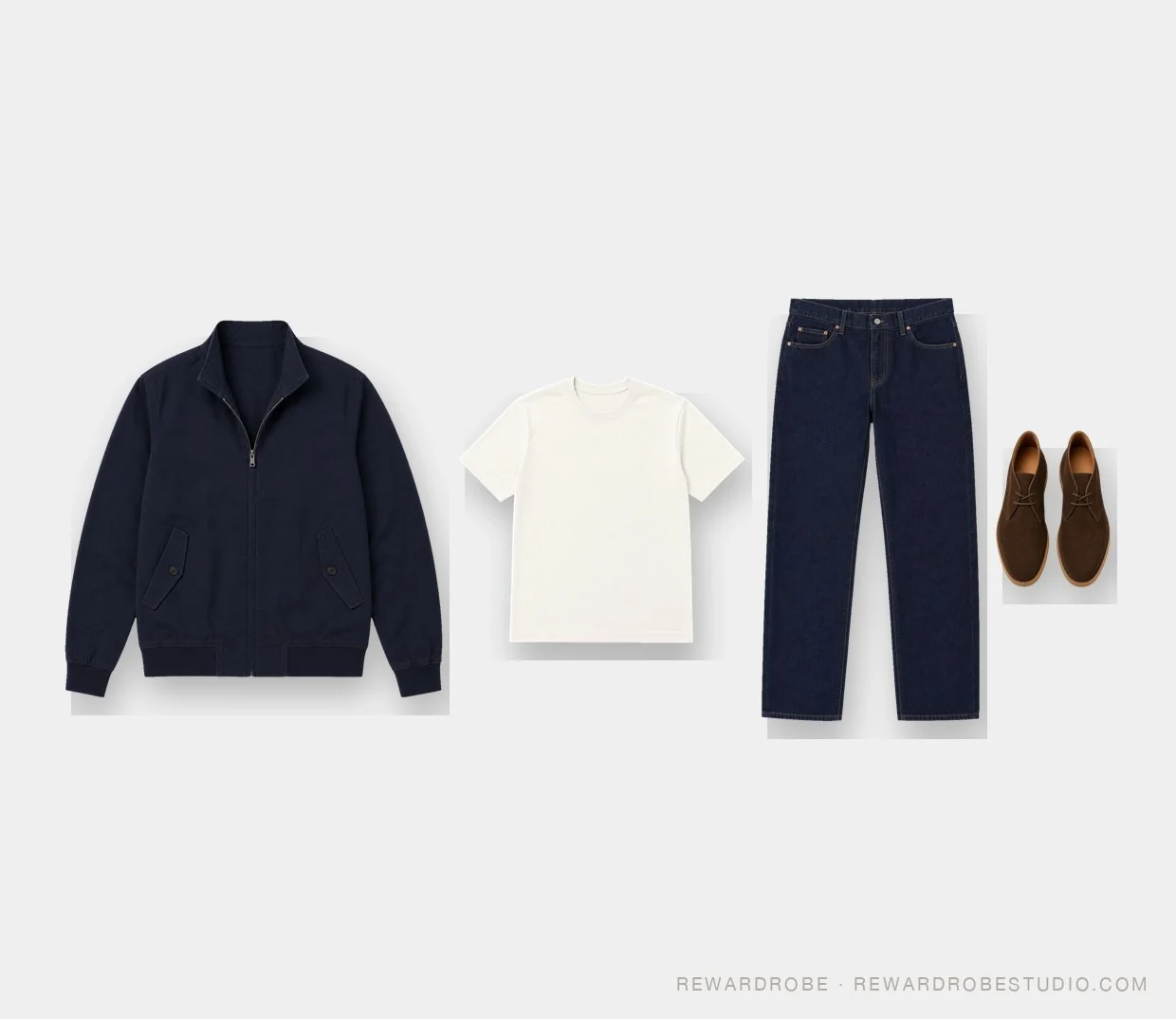
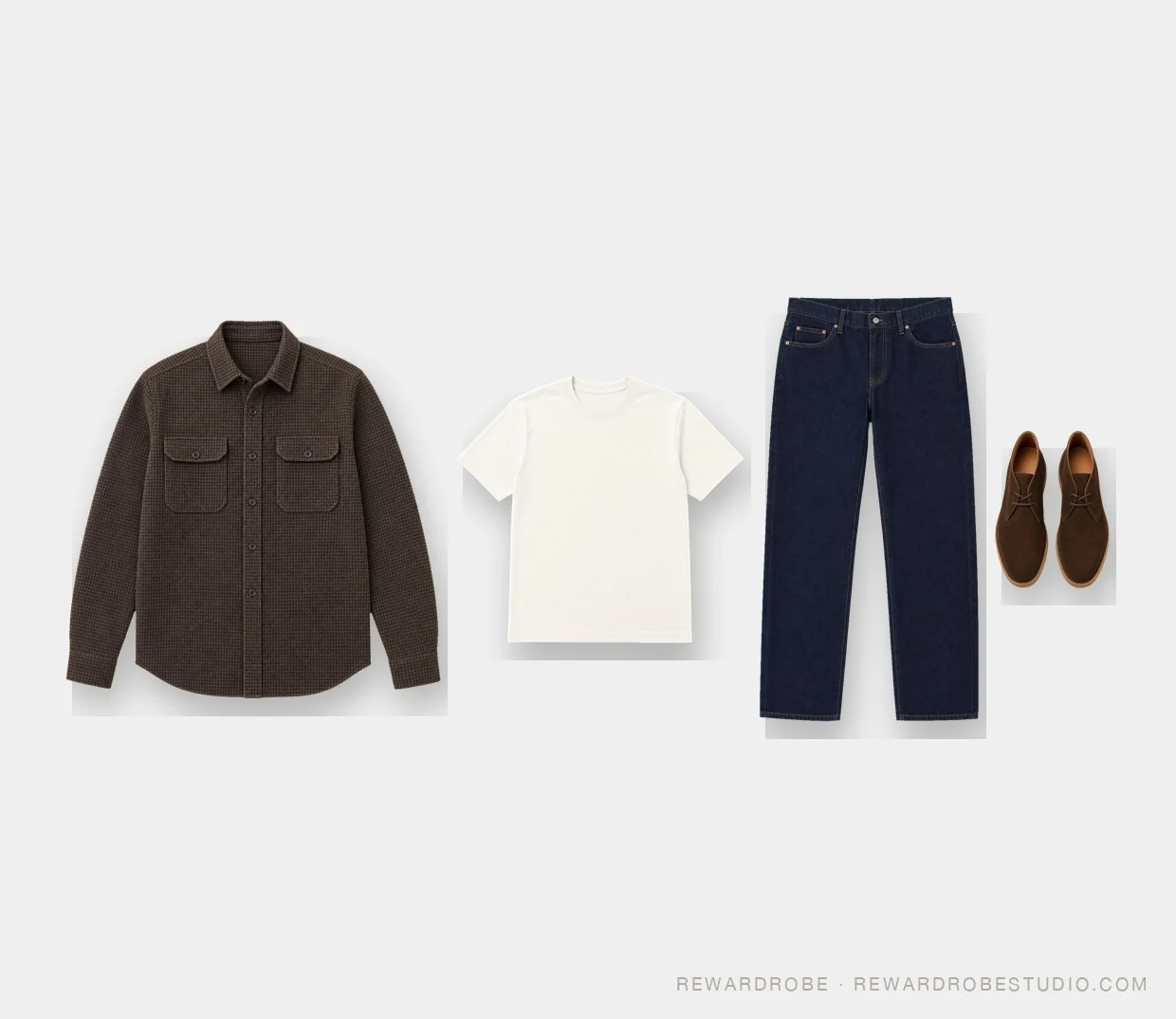
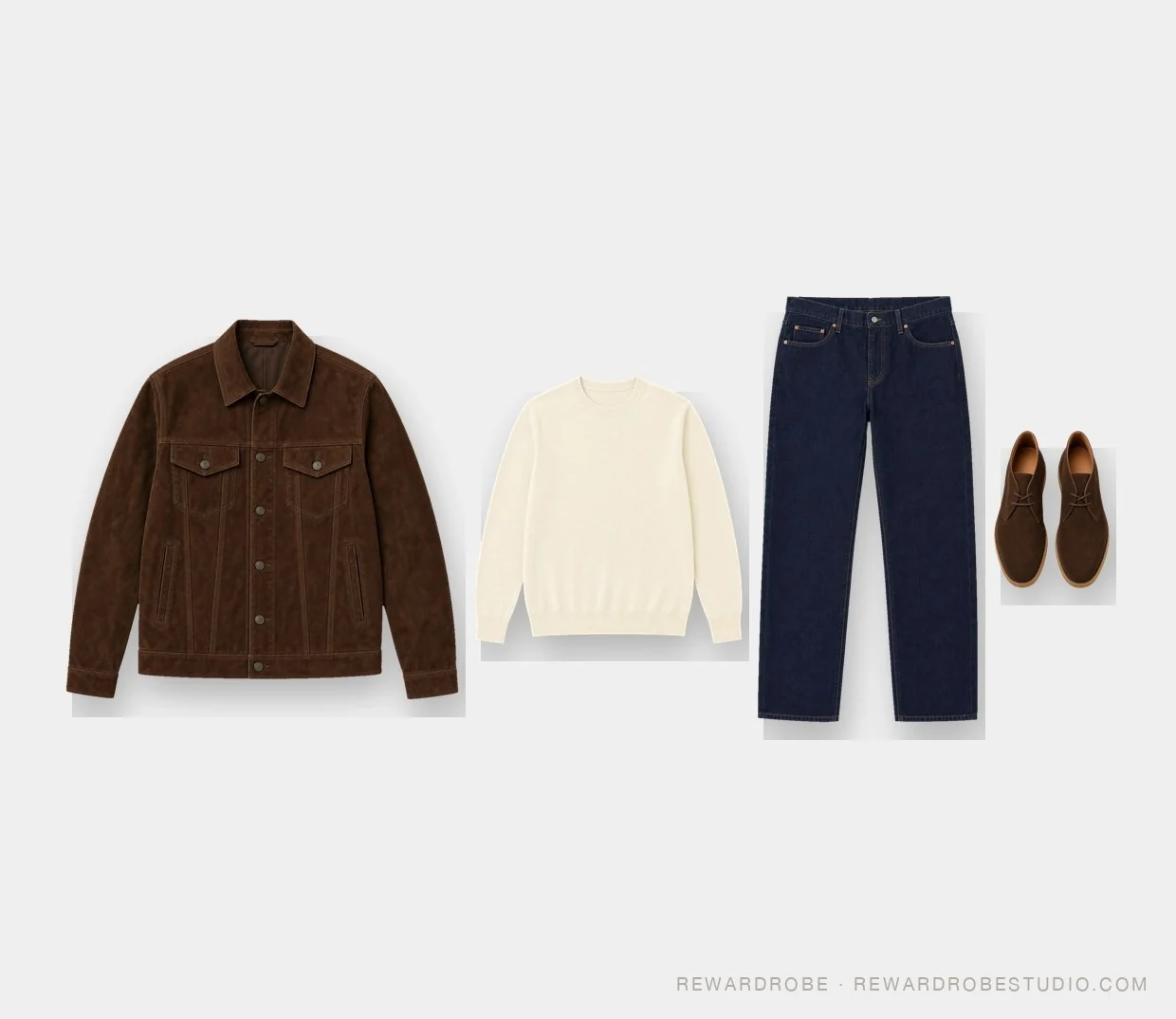
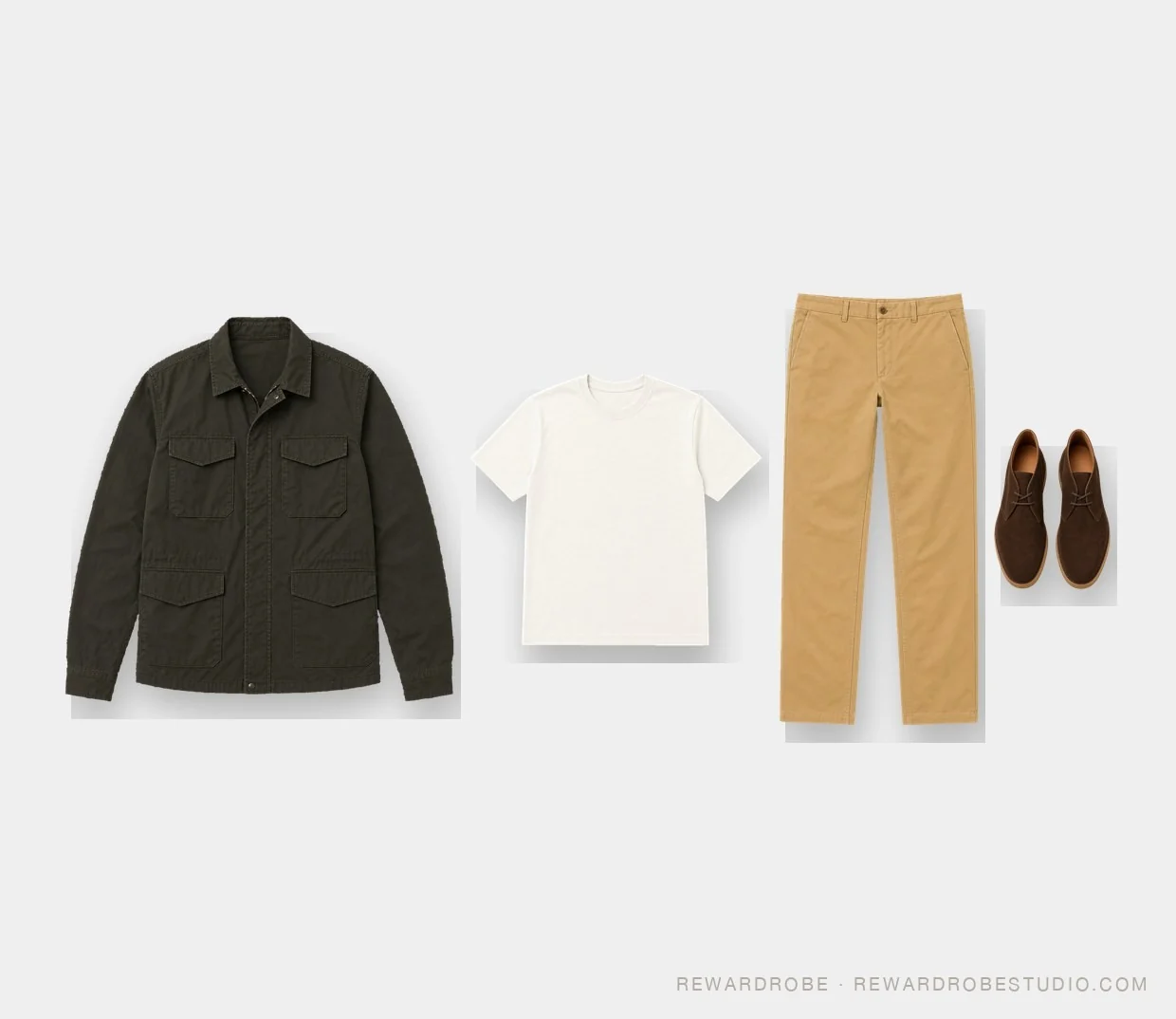
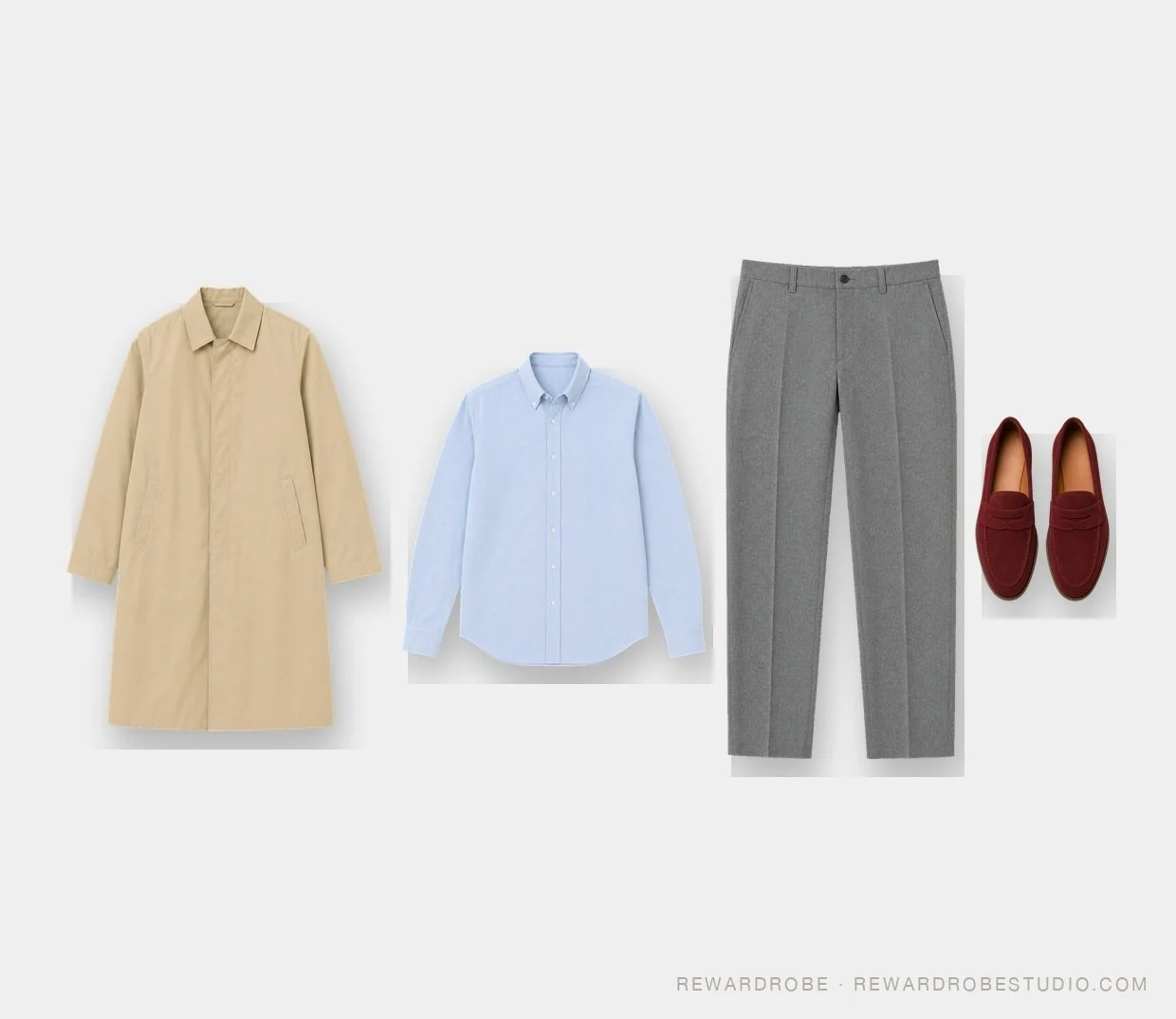
In a workplace with a stricter dress code, choose the trouser, shirt and shoe it requires first, then solve the weather with an appropriate removable outer layer. These formulas suit casual and smart-casual settings rather than every office.
Four fit checks before you leave
- Close the jacket over the actual outfit. Sit down and reach forward. Pulling at the shoulders or upper arms means the layers need more room.
- Check the shirt hem. Tuck a long shirttail. If wearing it out, choose a casual length that sits neatly with your jacket.
- Try the trousers with your shoes. Avoid a hem that drags or pools; it also collects more water on a wet pavement.
- Decide what you will remove. If the day warms up, the remaining shirt or knit should still look finished and feel comfortable.
What changes at 50°F or 70°F?
At 50°F / 10°C, a warmer knit and jacket may be useful, particularly if you will stand still. At 70°F / 21°C, you may be comfortable in just a shirt or a tee, carrying a light layer for later. Keep considering rain, wind, sun and activity rather than treating each temperature as a fixed uniform.
For more combinations from the same capsule, see 15 complete fall outfits for men over 40. For the wider colour-and-fit method, read how to build a capsule wardrobe after 40.
The Layering Edit — 45 curated looks
A standalone PDF with 21 pieces, three buying phases, a pairing map, fit guidance and a shopping checklist. Use the pieces you own and fill the gaps at your own pace.
60-degree weather: quick answers
Do I need a jacket in 60-degree weather?
Often, a light removable layer is useful at 60°F / 15°C, especially in wind, shade or a cool morning. You may be comfortable in a shirt or light knit in sunshine or while walking. Use the forecast and your comfort rather than a fixed layer count.
What shoes work in 60-degree weather?
Minimal sneakers, loafers with socks or chukka boots can work for a mostly dry day. For rain, choose water-resistant footwear with a suitable rubber sole. Suede and smooth leather soles are better saved for drier conditions.
What should a man wear in 60-degree rainy weather?
Start with a breathable top and trousers, then add a rain layer suited to the expected duration and intensity. Water-repellent cloth may suit a brief shower; for sustained rain, choose a waterproof garment with appropriate construction and rubber-soled footwear. Add a thin knit if you feel cold.
How should I adjust at 50°F or 70°F?
At 50°F / 10°C, you may want a warmer knit and jacket, especially while standing still. At 70°F / 21°C, many people can drop the outer layer. Wind, rain, sun, activity and personal comfort matter alongside the temperature.